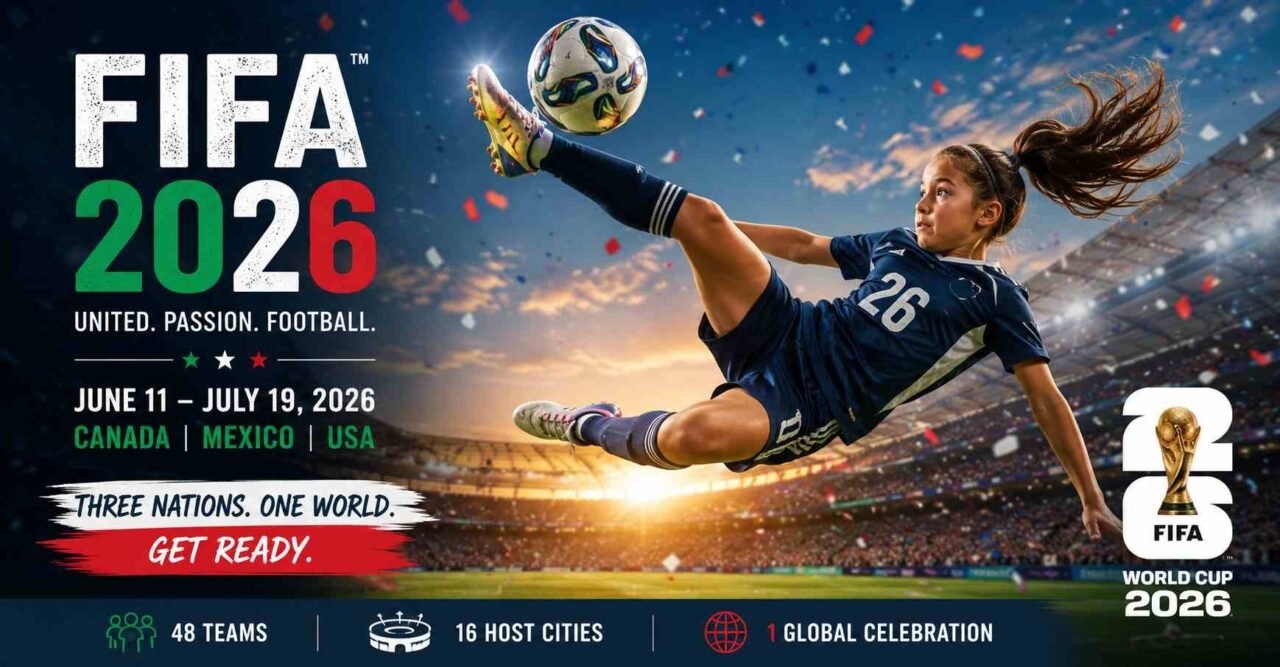
A Red Card for Them. A Visit to the Dentist for You.
A single premium FIFA World Cup 2026 tickets? $5,785.
A red card for an illegal high kick? Free.
A visit to the dentist afterward? Well… that’s where I enter the story.
The FIFA World Cup 2026 is inspiring a new generation of young soccer players, and as both a mother and a dentist, I absolutely love seeing it. There is something wonderful about watching children become excited about sports. They run harder. They practice longer. They spend less time staring at screens and more time outside. Parents find themselves sitting in folding chairs on chilly mornings with oversized coffees, cheering on children who seem to possess limitless energy.
Unfortunately, every four years another phenomenon appears.
Children begin watching the world’s greatest soccer players perform extraordinary feats and quietly conclude that they should probably try those same things during Saturday morning youth league games.
This is how bicycle kicks happen.
This is how goal celebrations become more elaborate than the goals themselves.
And occasionally, this is how a perfectly healthy front tooth finds itself unexpectedly introduced to a soccer cleat.
As a dentist in Mill Valley, I have noticed something over the years. Parents are remarkably prepared for most sports injuries. They know where the ice packs are. They know which urgent care centers are open on weekends. They know exactly how to respond when a child twists an ankle or scrapes a knee.
Dental injuries, however, tend to catch people completely by surprise.
Perhaps it’s because we don’t expect our teeth to be vulnerable. They’re hard. They’re strong. They’re designed to last a lifetime. We don’t spend much time thinking about them when we picture youth sports… Until suddenly we do. And that realization often happens very quickly.
Every Parent Worries About Knees. Few Think About Teeth.
When most people think about soccer injuries, they picture knees, ankles, hamstrings, and perhaps the occasional dramatic flop worthy of international television.
Teeth rarely make the list.
Yet dental injuries are among the more common facial injuries seen in youth sports. Soccer may not carry the same reputation as football or hockey when it comes to contact, but anyone who has spent enough time around the game knows that bodies collide. Heads collide. Elbows collide. Soccer balls themselves can become surprisingly effective projectiles.
Particularly when kicked by a teenager who has recently convinced himself he is destined for greatness.
I say that affectionately.
One of my sons spent years playing sports and lifting weights, and like many parents, I’ve watched countless young athletes perform feats that seemed to be fueled almost entirely by confidence. Confidence is wonderful. It helps children grow. It helps them take risks, learn resilience, and discover what they are capable of accomplishing.
But confidence occasionally exceeds skill… That is often when I get involved.
The FIFA World Cup Effect
There is something uniquely inspiring about the FIFA World Cup 2026.
The tournament captures imaginations in a way few sporting events can. Children aren’t simply watching soccer. They are watching dreams unfold. They are seeing athletes perform at levels that seem almost superhuman.
And then they head to practice.
Suddenly every striker is attempting impossible shots. Every defender is launching ambitious slide tackles. Every goalkeeper believes they are capable of airborne saves that would make television highlight reels.
Most of the time, that’s harmless fun.
Sometimes, however, enthusiasm creates opportunities for accidents.
I’ve seen chipped teeth caused by collisions between teammates who were both focused entirely on the ball. I’ve seen fractured teeth after an unexpected elbow during a contested header. I’ve spoken with parents who had no idea a permanent tooth could be knocked loose during what was otherwise a completely ordinary game.
The thing about dental injuries is that they often happen in an instant.
The game is moving along normally. Everyone is having fun. Then suddenly someone is holding a towel to their mouth and a parent is searching for a dentist’s phone number.
The Tooth Doesn’t Know It’s Just a Game
One of the challenges with dental trauma is that teeth don’t heal the way many other parts of the body do.
A bruised muscle recovers… A scraped knee heals… A sprained ankle improves with time.
Teeth are less forgiving.
When enamel chips, it does not regenerate. When a tooth fractures, professional treatment is often required. When a permanent tooth is knocked out, time becomes critically important.
That reality is one reason I encourage parents to take dental injuries seriously, even when they initially appear minor.
What looks like a small chip can sometimes involve deeper structural damage. A tooth that feels merely “loose” may have sustained trauma below the gumline. Occasionally the most significant issues are the ones that don’t hurt immediately.
Children, especially, are remarkably talented at underreporting discomfort when they want to get back into the game.
The Most Unpopular Piece of Equipment
Let’s talk about mouthguards.
I realize they are not exciting… No child has ever rushed home from school and announced that the highlight of their day was wearing a mouthguard.
Children will happily wear colorful cleats, matching socks, compression sleeves, wristbands, headbands, and occasionally hairstyles that seem to require engineering certifications to construct.
Yet somehow a mouthguard is often viewed as a bridge too far.
I understand the resistance. But I also understand what happens when protection isn’t there.
A properly fitted mouthguard can significantly reduce the risk of certain dental injuries during sports participation. It won’t prevent every accident, and it certainly won’t eliminate all risk, but it can provide an important layer of protection when enthusiasm begins outpacing judgment.
Which, if we’re being honest, is a fairly accurate description of youth sports.
What To Do If the Unexpected Happens
One of the most valuable things parents can know is that how they respond during the first few minutes after a dental injury matters.
If a permanent tooth is knocked out, handle it carefully by the crown rather than the root. Keep it moist. Call a dentist immediately.
More importantly, don’t assume everything is fine simply because your child insists they’re okay.
Adrenaline is powerful… The excitement of the game is powerful. And children have an impressive ability to minimize injuries when they think doing so will allow them to keep playing.
A quick evaluation can provide peace of mind and sometimes prevent more significant complications later.
A World Cup Lesson Worth Remembering
One of the reasons I enjoy events like the FIFA World Cup 2026 is that they remind us how powerful sports can be.
Sports teach teamwork… They teach perseverance… They teach humility, resilience, and discipline.
They create friendships and memories that often last a lifetime.
I would never want fear of injury to discourage a child from participating. Quite the opposite.
I want children running, competing, learning, and occasionally dreaming far bigger than their current abilities justify.
That’s part of growing up. But I also want parents to remember that protecting a young athlete includes protecting their smile.
Because long after the final whistle blows, long after the championship trophies are handed out, and long after the FIFA World Cup 2026 becomes part of sports history, those teeth still need to last a lifetime.
And if one ambitious bicycle kick, one overzealous header, or one illegal high kick earns another player a red card…
I’d prefer not to meet the result in my dental chair.
With care,
Dr. Frances H. Yankie, DDS
Parent, Dentist, and Advocate for Family Wellness in Marin County
For appointments, call or text my office at (415) 383-0824